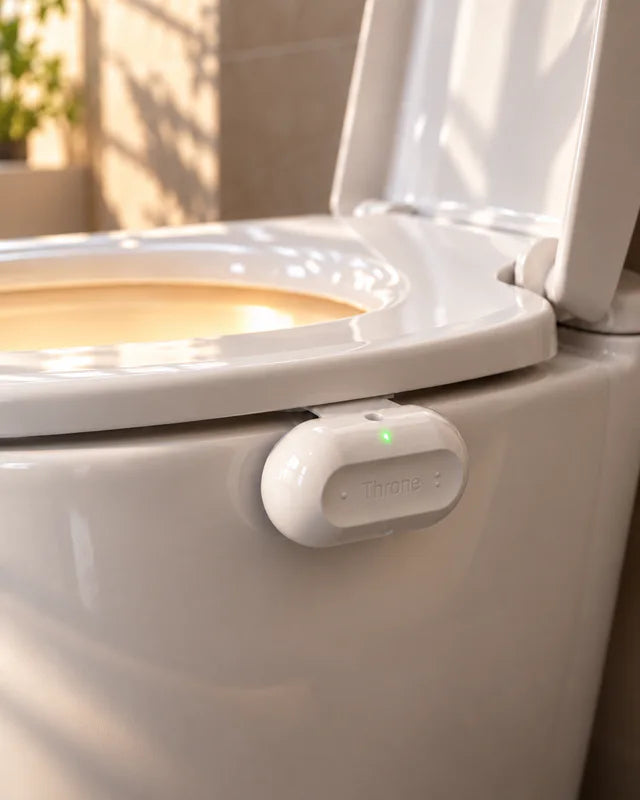
Throne One
Order to your parent’s address. Set it up together during a visit, or over video. If it isn’t a fit within 30 days, send it back.
- Solo mode and Shared mode
- Clips on, no tools
- Stays plugged in via USB-C


For families caring for an aging parent
Throne clips onto Mom’s toilet and logs every visit automatically. The care team dashboard, coming soon, will show you her routine from anywhere, with alerts for the changes you care about.
9:41
Care team
Mom today
Routine as usual
Mom was up 4 times last night. Her usual is 2.
Call MomShare with Sam
Coming soon: the care team dashboard
Sound familiar?
Her bloodwork says otherwise. Asking again just starts another fight.
The hallway camera shows the bathroom door. After fifteen minutes, your stomach drops.
Then she isn’t, at home. The doctor only sees her best fifteen minutes.
You hear about the bad week after it’s over, usually from a neighbor.
Why the bathroom
It’s where the most useful everyday signals live: how much someone drinks, how regularly they go, how often they’re up at night. It’s also where families won’t put a camera, and where parents are least likely to tell you what’s changed.
Thirst fades with age, and some older adults drink less on purpose to avoid accidents or night-time trips.
Many common medicines make it harder.
Nearly 3 in 10 go two or more times a night.
What you’ll see
Throne compares every visit with your parent’s own normal, so the care team sees what’s changed, not a wall of numbers.
Alerts you set
Coming soon
Set a few simple rules for your parent’s routine. The care team dashboard tells you when one is met, and everything else stays quiet.
Get notified when it launches.
We’ll also send a few emails about caring for a parent. Unsubscribe anytime.
No bowel movement in 3 days
“No bowel movement recorded for Mom in 3 days.”
2 or more night-time visits
“Mom was up 4 times last night. Her usual is 2.”
Loose stools
“Mom had 3 loose stools today.”
Hydration low over several days
“Mom’s hydration has been below her usual range for 5 days.”
No visit in 4 hours (daytime)
“No bathroom visit recorded for Mom since 9:40 am.”
Battery low
“Mom’s Throne needs a charge in about 3 days.”
Overnight alerts can wait for a morning summary.
Alerts describe changes in bathroom patterns. They aren’t medical advice or an emergency service.
How it works
Step 1
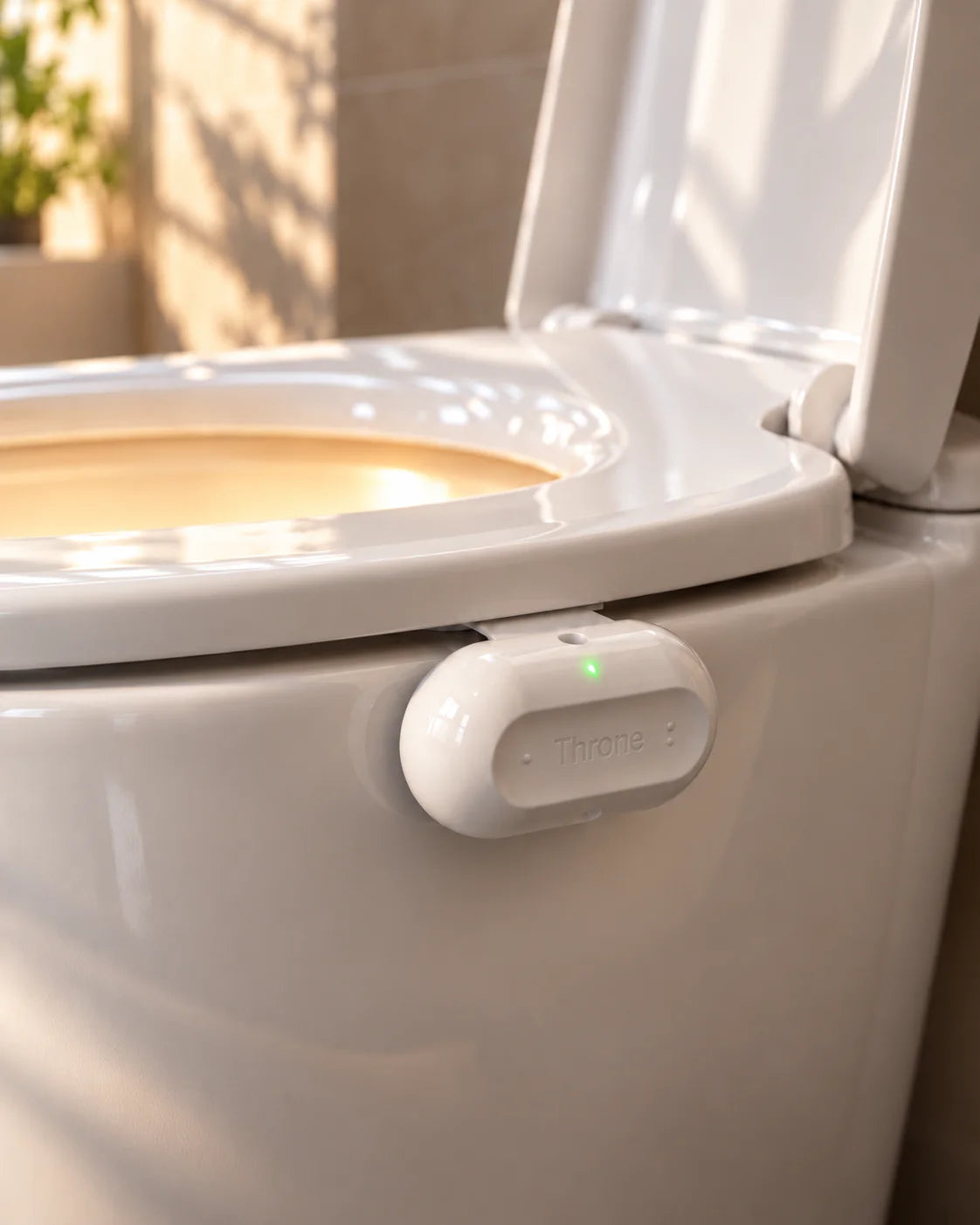
It clips onto the toilet they already have, in seconds. No tools, no plumbing. Leave it plugged in with the USB-C cable and it never needs charging.
Step 2
For a bathroom only your parent uses, Solo mode captures every visit automatically. Sharing a bathroom? Shared mode recognizes each person.
Step 3
Coming soon
Your parent adds you from their Throne app, and can remove access anytime. Each person chooses which alerts they get.
Throne’s optical sensor points straight down into the toilet bowl. Any frame that might include part of a person is deleted automatically. Your care team sees scores and trends, never pictures.
Your parent decides who joins the care team, and can remove access anytime.
In Shared mode, Throne doesn’t activate for guests.
Your data is encrypted, and Throne never shares your health information without your permission.
Never covert: your parent is part of the setup.
Nothing for them to do
Most devices for aging parents ask something of them. Throne asks nothing. They just use the bathroom.
Nothing to forget on the nightstand.
The app lives on their account; the care team dashboard is coming soon.
In Solo mode, every visit is captured automatically.
Leave it plugged in.
It’s the same gut-health sensor younger adults buy for themselves.
| Throne | Medical alert pendant | Indoor camera | Daily check-in call | |
|---|---|---|---|---|
| What you learn | Daily routine, hydration and regularity, against their own normal | That a fall happened, if they press the button or it detects one | Movement in the rooms it can see | Whatever they choose to tell you |
| What they have to do | Nothing, in Solo mode | Wear it and keep it charged | Nothing, though many feel watched | Pick up, and be candid |
| Privacy | Sees only the inside of the bowl | Worn on the body | Video of their home | Private |
| Cost | $399 once, then $6 a month, month to month | About $20–60 a month, sometimes with a contract | $20–200 a camera, plus about $10 a month for video storage | Free, but it costs you time and worry |
Throne isn’t an emergency device: it doesn’t detect falls or call for help. Many families pair it with a smartwatch or medical alert pendant.
For the whole family
The care team dashboard will let your parent invite siblings, a spouse or an aide to see the same results.
The conversation
The hardest part isn’t setup. It’s the conversation. Here’s what works for other families.
“It’s so I can worry less when I can’t be there.” Parents who refuse help for themselves often accept it for you.
It points into the bowl. The care team sees scores, never pictures, and she decides who’s on it.
It’s the same gut-health sensor younger people buy for themselves. Nothing about it says “old.”
Try it together for 30 days. If it isn’t right, send it back.
Scientific Advisory Board
Our advisors include the lead authors of clinical guidelines for ulcerative colitis, SIBO, and colorectal cancer screening.


Order to your parent’s address. Set it up together during a visit, or over video. If it isn’t a fit within 30 days, send it back.
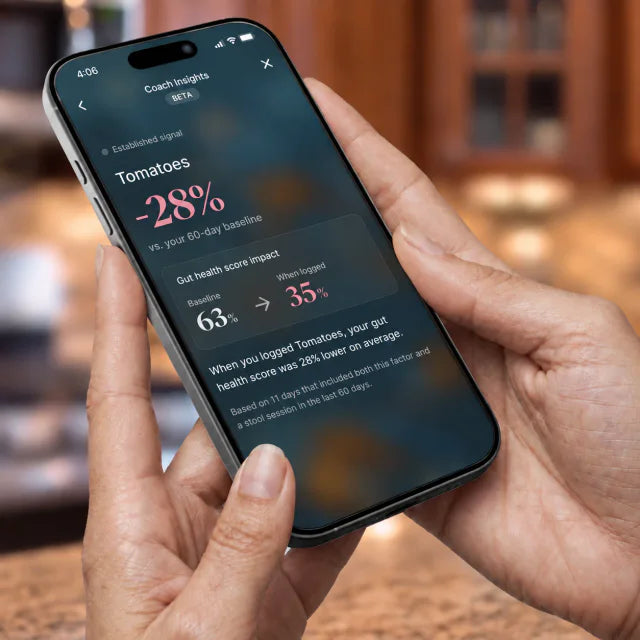
Their results, in their app. Your parent gets a report card after every flush. The care team dashboard, coming soon, will let them share those results with you.
Throne One
$399 one time, then a $6 a month membership for your parent, month to month
It uses an optical sensor that points straight down into the bowl. Any frame that might include part of a person is deleted automatically, and nobody, including you, ever sees images. The care team sees scores and trends.
No. In Solo mode, for a bathroom only your parent uses, every visit is captured automatically: no phone to carry, no button to press.
Use Shared mode. It recognizes each person by their phone or one of two buttons marked in Braille, and it doesn’t activate for guests. Solo mode is for a bathroom one person uses; if a visitor uses it, that session can be marked as not theirs or deleted.
Coming soon with the care team dashboard. With your parent’s permission, they’ll add you to their care team from the Throne app, and they can remove access anytime. You’ll see their results on the care team dashboard and get the alerts you choose, such as no bowel movement in 3 days or 2 or more night-time visits. Care team seats are free.
No. Throne doesn’t detect falls or call for help. It shows routine and health trends. For emergencies, pair it with a smartwatch or medical alert device.
No. Throne is a wellness product and doesn’t diagnose anything. It shows hydration and bathroom patterns and when they change from your parent’s normal. Changes may be worth discussing with their doctor.
Throne fits most standard white toilets with a rim up to 2.25 inches.
Throne only sees what happens in the toilet, so it works best for people who still use the toilet on their own.
It syncs over your parent’s home WiFi. It can stay plugged in via USB-C, or run about 30 days on a charge. Low-battery alerts for the care team are coming soon with the care team dashboard.
Throne may be HSA/FSA eligible with a letter of medical necessity through Truemed. Funds generally cover the account holder, a spouse or dependents, so check which account applies to your family.
Send it back within 30 days for a full refund.

You can’t be there for every glass of water. Throne notices the changes, so your next call can just be a call.
Get Throne for your familyThrone is a wellness product. It does not diagnose, treat, or prevent disease. Changes from your parent’s typical trends may be worth discussing with their doctor.